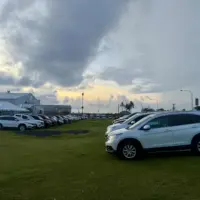
The High Court has issued an order prohibiting ASG from disposing of or altering, in any form, the 47 vehicles which the Customs Division of Treasury seized.
The order, issued last Friday, has temporarily halted ASG’s bid auction of the vehicles. November 24 was the deadline for interested bidders to submit their bids for the vehicles to the Office of Property Management.
The order by Chief Justice Michael Kruse is in response to a complaint filed by importers of the vehicles. The plaintiffs are Aileen Inc., doing business as Tuanaitau’s Car Rental; Taumafai Inc.; Minrongda Inc.; Moana Pacific Inc.; AAA LLC.; and Loving Star Enterprises.
Named as defendants are ASG, the Director of the Department of Treasury, the American Samoa Customs and Excise Tax Division, and John Does 1-10. The plaintiffs are represented by Attorney Togiola Tulafono.
The complaint states that the plaintiffs imported automobiles and vehicles from the People’s Republic of China to American Samoa for business use and, in some cases, for personal use, for which they received clearance and permission from ASG to import. However, upon arrival, Customs seized the automobiles and has since refused to release them to the plaintiffs.
According to the complaint, the vehicles have been seized and detained by defendants pursuant to a notice of seizure issued by the defendants purportedly as “contraband, undeclared goods, merchandise and commodities or falsely declared goods, merchandize and commodities” entering American Samoa.
It cites that under ASCA section 27.1042(a), the notice of seizure to be served to a property owner shall list the items seized, the law(s) violated, the violators options, and the Customs contact location and telephone number, and advise that the goods will be forfeited. In this case, however, neither notice forms used by defendants to seize the automobiles contains a list indicating which law(s) were violated by any of the plaintiffs. This, the complaint says, renders the notice of seizure defective, and such defect and failure on the part of the defendants violates each plaintiff’s right to due process under the Fifth Amendment of the United States Constitution and Article I, Section 2 of the Revised Constitution of American Samoa.
In addition, using a legally and constitutionally defective notice form to seize the plaintiffs’ properties renders the seizure of all the automobiles wrongful and unlawful. Therefore, the defendants cannot legally forfeit any of the automobiles seized.
It also states that all of the seized automobiles were imported with the knowledge an permission of the ASG, and ASG did not at any time prior to the delivery of the automobiles to American Samoa notified any of the plaintiffs that their imported vehicles would not be permitted to land because of any legal prohibition.
The complaint argues that ASCA section 27.1042 provides that only contraband, undeclared goods, merchandise and commodities or falsely declared goods, merchandise and commodities are subject to seizure and forfeiture, and that none of the seized vehicles are in that category. Therefore, their seizure was wrongful and without legal authority.
The complaint also claims that the seizure and forfeiture statutes do not apply to merchandise that are not abandoned or received by false declaration, and that the form by which the defendants attempted to obtain seizure and proposed forfeiture of the plaintiffs’ property fails to meet the requirements of this same section. It further states that the alleged prohibition of importation of vehicles from China to American Samoa does not apply to second hand automobiles imported for personal and business use and not for resale.
The plaintiffs asks that the defective notices of seizure be quashed and declared null and void. It also asks the court to examine the plaintiffs application for a writ of seizure and grant said writ requiring the court marshal to seize the plaintiffs automobiles from defendants and deliver than back to the plaintiffs. The plaintiffs also seek a temporary restraining order enjoining defendants from auctioning off, selling, destroying, or damaging any of the automobiles pending further order of the court.
In his ruling of last Friday, Chief Justice Kruse said the court declines to issue a writ of seizure as requested by the plaintiffs without a hearing. It is hereby ordered, however, that the hearing of the plaintiffs’ application for writ of seizure is provisionally set for December 23, at which time the parties should also be prepared to discuss any applicable federal laws.
“Defendant ASG shall not dispose of or alter, in any form, the automobiles consigned to the plaintiffs and presently withheld by ASG pending the hearing on this matter and further order of the court. Defendant ASG is admonished that violation or failure to obey this order shall subject it to punishment for contempt of court.”


