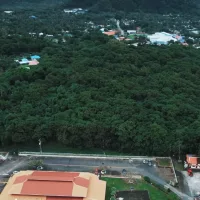
The United States Department of Agriculture’s (USDA) Forest Service is awarding $10,333,000 to fund the preservation of the Naumati Lowland Rainforest.
A press release from the Department of Marine and Wildlife Resources says the funding was announced yesterday under the USDA Forest Legacy Program Inflation Reduction Act Funded Projects 2024 (Round 2).
The Naumati Lowland Rainforest will be preserved as American Samoa’s first locally managed Territorial Conservation Park.
After a 40-year struggle to save the forest, DMWR and the American Samoa Government will manage the park for conservation education, nature recreation, and economic growth through ecotourism while permanently protecting critical wildlife habitat.
The Naumati lowland forest in Ottoville is the last remaining significant stand (approximately 27 acres) of a unique tropical lowland “tava” forest. It once covered most of the Tafuna plain, but has almost all been cleared for development. The forest has a high diversity of wildlife, and provides the only refuge on the Tafuna Plain for rare species including the Samoan flying fox “pe’a vao”, purple-capped fruit doves “manutagi”, and many-colored fruit doves “manuma”. The forest also contains rare tree species including; “salato”, the “stinging nettle” tree, “tava” (Pometia pinnata), and “aoa”, massive native banyan “strangler” figs.
The year-round fruits of this tree provide a critical food source for wildlife, but with urbanization, banyans have been almost completely wiped out from the lowlands of AS. The forest also contains the Tia Seu Lupe Historic Monument, which is the best preserved and most accessible star mound in the territory.
The effort to preserve this rare forest was led by DMWR with collaboration from local partners including the Governor’s Office, ASG Attorney Generals Office, ASCC-Land Grant, and ASEPA.
Federal and international partners aided with the project development including significant contributions from the USForest service, US Fish and wildlife Service and the Nature Conservancy.
The United States Fish and Wildlife Service Office of Conservation Investment has provided funding for a conservation lease, while efforts to secure funding for permanent protection were developed.
As the last representative of a unique forest type, the site has exceptional historical value as it will be the only tangible link to the primordial forest types found in American Samoa. Protecting Naumati will greatly expand public access to nature for current and future generations of American Samoan’s, while also potentially providing jobs and economic growth for eco-tourism.


