American Samoa’s efforts to combat invasive species was the focus of a visiting team from the Apia-based, South Pacific Regional Environmental Program (SPREP).
A team from SPREP’s Pacific Regional Invasive Species Management Support Services, (PRISMSS), was in the territory recently and was hosted by the American Samoa Environmental Protection Agency.
Under the Island and Oceans Ecosystems priority, SPREP provides regional leadership and technical guidance in maximizing and integrating multilateral environmental agreements (MEAs) and regional environmental frameworks.
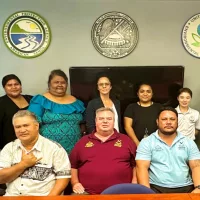
The SPREP team met with members from the American Samoa Invasive Species Committee (ASISC) and the Biosecurity Leadership Team, comprising various government entities with objectives linked to invasive species management.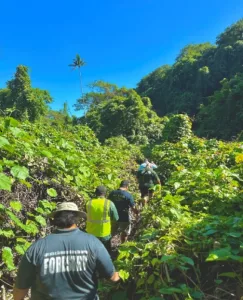
The stakeholders’ meeting provided the SPREP visitors an understanding of how the territory manages invasive species. This was also an opportunity for American Samoa to highlight the strengths and weaknesses of its operations in order for SPREP to determine the appropriate technical guidance suitable for the territory.
SPREP’s Invasive Species Adviser David Moverley observed, “American Samoa has a wealth of organizations across many sectors which have a focus on invasive species management. Collaboration and cooperation are paramount to not only managing invasive species effectively but also to ensure such actions are supported throughout the communities and at higher agency and political levels.”
AS-EPA Director Lefega Fa’amao Asalele Jr. thanked SPREP for the opportunity to engage with American Samoa on matters related to invasive species. “As SPREP’s focal point in American Samoa, AS-EPA is committed to work in collaboration with the secretariat, to leveraging resources to improve invasive species management in American Samoa. This is the first of a series of meetings between SPREP and local partners, to strengthen our capacity development, and to further enhance our commitment in invasive species management, in support of the 2050 Strategy for a Blue Pacific Continent.”


