People with Disabilities in Colleges and Universities – How Did We Get Here and Where Are We Going?”
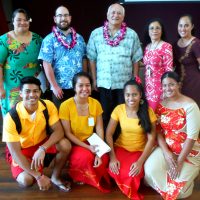
That was the topic of a talk by Dr. Glenn Gabbard, a distinguished figure in the effort to include people with disabilities in higher education, assisted by his son Max Rasbold-Gabbard, at the American Samoa Community College last week
Gabbard told his audience “Typically, most students are unaware of people with disabilities as a group that is disenfranchised from their civil rights,” .
Gabbard’s long involvement with the fight for the rights of people with disabilities actually began here in American Samoa. A member of the local Gabbard family, he graduated from Samoana High School in 1971, and then majored in English Literature at Sonoma State University before returning to the Territory in 1977 to teach at ASCC.
In 1983 came a very close call when his daughter Megan Aliitasi Rasbold-Gabbard was born in at LBJ Tropical Medical Center. The infant’s premature birth at 28 weeks put her at risk from a number of life-threatening conditions. Megan was rushed to Honolulu for treatment and survived, but subsequently was diagnosed with cerebral palsy at the age of 18 months. Once again, she survived, and thanks to the loving support of her family, today she is able to be independent despite a number of severe sensory impairments.
With Megan’s treatment as their main priority, Gabbard and his family relocated to the US east coast. Today, Gabbard is the principal consultant of Red Wheelbarrow Consulting LLC, a consultation group that focuses on social justice and organizational change. He also serves as the state coordinator of the Massachusetts Inclusive Concurrent Enrollment Initiative, as state-funded effort to support more young adults with disabilities to attend public colleges and universities.
Gabbard and Rasbold-Gabbard’s recent visit to American Samoa was to assist in the establishment of the Department of Health’s new Family-to-Family Health Information Center. While in the Territory, they took the opportunity to give their talk on people with disabilities in colleges and universities at ASCC.
Gabbard observed, “Though there are many services and supports for individuals with disabilities in the Territory “as with many states and jurisdictions, there are challenges in better coordinating these supports and in providing help to families and children on a more immediate basis.”


