
By Monica Miller
The clock on the wall of what used to be the JR Nobiru Train Station in the seaside city of Higashimatsushima, Japan, stopped at 3:46 pm on March 11, 2011.
The cracked clock still hangs on the wall of the train station as a reminder of that awful day 7 years ago when the earth rocked, and a tsunami that reached more than 12 feet high swallowed up homes, cars, utility poles and whatever else was in its path.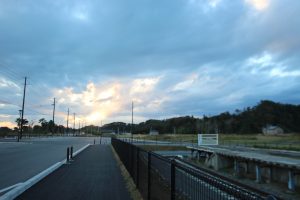
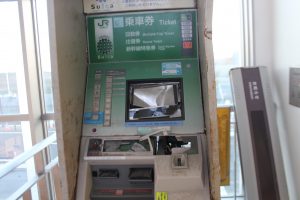
A ticket machine is still standing on the second floor of the terminal building, but many parts are missing.
Before that day in 2011, Higashimatsushima was home to some 43,000 people. But 1,113 were killed or declared missing in the disaster. And more than 2,000 people moved away, seeking safer places to live, away from the ocean. The town’s population is now about 40,000. It looks deserted, with far fewer homes dotting the land.
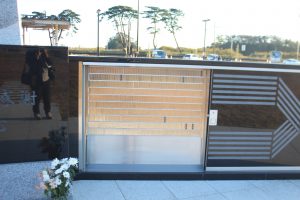
A memorial to those who perished is inscribed with the names of the victims of the earthquake and tsunami.
It’s located just behind the train station, where many of the houses destroyed by the tsunami once stood. Only a few have been rebuilt in the area. Most residents have relocated further inland — and a new train station has been built on higher land.
 Tourists come from all over Japan and other countries to see the effects of the March 11 disaster and how the town of Higashimatsushima is rebuilding.
Many of them meet a woman who relives the tragedy of losing her father every time she greets visitors. Toshiko Miura is a tour guide for the city.
She was working the day the 9.0 magnitude quake struck, and says she ran with others to an evacuation site on a hill.
However, her 84-year-old father was in an elderly daycare facility. He and other elderly seniors there could not be saved in time.
 “The names of members of my family who were killed in the tsunami,” are on the memorial says Ms. Miura.
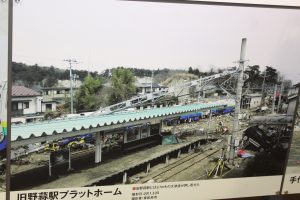
At the old train station, which is now a visitor attraction, she points out signs marking the height of the tsunami waves.
We’re shown a video, which depicts frightening pictures of when the earthquake struck, when the first wave from the tsunami reached shore and several more waves, which completely wiped out buildings, knocked a train off its tracks and created a soup of people, cars, trees, and heavy machinery that washed about 700 meters inland.
Town residents share their memories of the earthquake and tsunami.
One heartbreaking story is from a gentleman whose wife was killed.
After feeling the shaking of the earthquake, the man says he and his wife safely made their way to the local evacuation center. But then, through tears, he tells of how his wife went back to their house without his knowledge to retrieve a pet dog belonging to their son.
The couple did not initially take the dog because animals aren’t allowed at the evacuation center.
“But my wife saw another woman at the center with a dog, and she decided to go home to get our son’s dog,” the man recounts.
His wife didn’t make it. She was among the more than 1,000 residents of Higashimatsushima who were killed or went missing.
The man says he wants people to know that when disaster strikes, they should just take care of themselves, and not worry about other things.
Our guide, Ms. Miura, has a similar message.
Even as she still mourns the loss of her father, she says she feels driven to talk about what happened, and teach people what to do in a tsunami, so they can be safe.
News Director Monica Miller is in Japan with a group of journalists from the Caribbean and Pacific as guests of the Association for Promotion of International Cooperation and the Foreign Press Center Japan.


