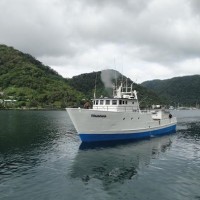
The American Samoa-based U.S. flagged longline fleet has secured the prestigious Marine Stewardship Council (MSC) Fisheries Certification.
This was announced by Starkist Co which the local longline fleet supplies.
The MSC Fisheries Certification is based on the fleet’s sustainable fishing practices, according to the highest science based standards.
The rigorous assessment began in December 2016.
StarKist Co. funded and managed the effort as part of the company’s commitment to promote and source from sustainable fisheries according to science-based standards.
StarKist worked with members of the Tautai-O-Samoa Longline & Fishing Association, other independent U.S. vessel owners,the Western Pacific Region Fisheries Management Council (WPRFMC) and the Pacific Island Regional Office (PIRO)to successfully complete the fishery assessment.
Cary Gann, Director of Seafood Procurement, StarKist Co. said, “StarKist has always had a strong commitment to sustainability and we were proud to support the American Samoa-based U.S. flagged longline fleet during the rigorous MSC assessment process.
“We congratulate them on obtaining the MSC Fisheries Certification, which is a validation of their sustainable fishing practices. With MSC Fisheries Certification, these vessels and their owners can be recognized and rewarded for sustainable fishing. I also want to recognize and thank Eric Kingma of the WPRFMC for his support throughout the MSC assessment process.”
StarKist has already introduced new tuna products with the MSC eco-label into the U.S. market under the Blue Harbor Fish Co. brand, but there is limited fish supply. As a result, StarKist hopes its investment in the local fleet will help them to gain an advantage in a growing market.
As with many of the U.S. fisheries, these vessels fishing in the U.S. EEZ of American Samoa are operating under some of the strictest fisheries management regulations in theworld. For many years, this has placed them at a disadvantage to foreign flagged fishingfleets, and the result has been a steady decline in the number of U.S. vessels operating out of American Samoa.
According to Gann, StarKist hopes that this certification can ultimately help to revitalize and perhaps even grow the local longline fleet, which is an important source of supply for the StarKist Samoa cannery.
The company is also encouraging other tuna fisheries to work towards MSC certification so there is adequate supply to support the small but growing market for MSC-certified seafood products in the U.S.


