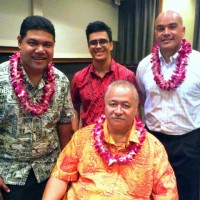
The pros and cons of American Samoa’s political relationship with the United States was the focus of a forum hosted by the Social Science Department of the American Samoa Community College last week.
The ASG Office of Political Status, Tapaau Dr. Daniel Aga, headed the panel of presenters, which included Tualauta Representative Samuel Meleisea, and ASCC Executive Counsel Mr. Kenneth Kuaea.
ASCC administrators present for the Forum included Vice President of Academic and Student Affairs Dr. Lina Gaea’i Scanlan, Dean of Academic Affairs Mrs. Letupu Moananu, and Office of Institutional Effectiveness Director Mr. Sonny Leomiti.
Dr Aga explained how American Samoa enjoys a degree of autonomy with regards to its own laws protecting our lands and culture, but is also subject to federal laws which occasionally bring challenges.
He cited the effect on our economy of the mandated minimum wage increase, the difficulty for some to access travel because of the federal Cabotage Law, and the recent controversies over fishing rights as examples of these challenges.
He reviewed of the options American Samoa could pursue were it to decide to seek a change in its current status as an unorganized and unincorporated territory of the US.
He clarified that the options come with both benefits and risks, which makes it all the more important that American Samoa’s citizens gain as much awareness as they can of the political realities before making a decision on which path would truly serve their long-term interests best.
Rep. Meleisea spoke of the effect of federal laws on his own constituents, recalling how residents of his district consulted with him after losing their jobs following the cannery closure that resulted from the minimum wage increase.
Meleisea said the Fono would take action to support the will of the people, if voters decided to seek a change in our political status.
In the meantime, he encouraged all young adults to familiarize themselves with both the history that has led to American Samoa’s current political status as well as the options still open to us for the future.
Mr. Kuaea posed a number of thought-provoking questions to encourage critical thinking on the subject.
“Is it reasonable,” he asked, “to believe that the political status our forefathers received aligned with our people’s best interests given the discrimination that other peoples of color were experiencing at the time?”


