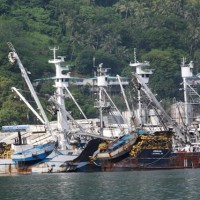
The importance of maintaining the tuna supply to the StarKist cannery in American Samoa, which relies heavily on tuna brought in from U.S.-flagged purse seiners, was discussed at the Western Pacific Regional Fishery Management Council meeting this week.
The Council requested that the National Marine Fisheries Service (NMFS) proceed, with a 2015 proposed rulemaking to recognize a distinct American Samoa purse seine fleet comprised of some U.S.-flagged vessels.
This rulemaking could potentially recognize an American Samoa fishery that would be entitled to privileges within the Western and Central Pacific Fisheries Commission (WCPFC), granted to small island developing states (SIDS) and participating territories.
These privileges include exemptions to seasonal fish aggregating device closures and limits to high seas fishing access. This would incentivize U.S.-flagged American Samoa vessels to fish in WCPFC waters and offload in American Samoa, but NMFS has yet to proceed with this.
Adding to this disappointment was a proposed rulemaking this month, to separate U.S. purse seine effort limits into a high seas effort limit and an effort limit within the U.S. exclusive economic zone (EEZ).
Council members expressed their concern that there is not a sufficient public comment period for this rulemaking and about the disproportionate burden this places on the territory. In previous years, NMFS had combined limits to high seas and U.S. EEZ purse seine fishing days as a single limit to optimize fishing opportunities.
Council Chair Archie Soliai of American Samoa expressed his dismay with NMFS not proceeding with rulemaking to recognize a distinct American Samoa fleet, yet moving forward with regulations for limits that could potentially drive U.S.-flagged purse seiners to fish in the eastern Pacific and be less likely to offload in Pago Pago.
“This proposed rule will have significant negative consequences for American Samoa and put the territory at significant risk. I realize the United States needs to comply with the WCPFC. But why does our government not regulate the U.S.-flagged vessels in American Samoa under the WCPFC as a SIDS?” he asked.
“Incoming tuna to supply the cannery has been going down since 2008,” said Will Sword, Council vice chair for American Samoa.
“The feds keep giving away what we need to keep our production going. This does not provide justice for us with what we produce for the nation.”
Approximately 100,000 metric tons of tuna are offloaded in Pago Pago each year, of which the majority are provided by U.S.-flagged purse seine vessels.
The Council will respond to the proposed rulemaking for separate high seas and U.S. EEZ effort limit for U.S. purse seine vessels, requesting NMFS consider the negative impacts that the rule will have on American Samoa and an extension for the comment period to Nov. 1, 2022.
The results of a 2016 study on the Effort Limit Area for Purse Seine closure in 2015, found it had an impact of up to $110 million during that period.


