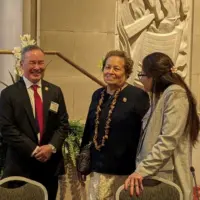
College students from American Samoa, Guam, the CNMI and the US Virgin Islands could soon benefit from in-state tuition rates at public colleges stateside. KHJ News Washington correspondent Matt Kaye reports on House legislation that now heads to the Senate…
The House passed 351 to 72 the Territorial Student Access to Higher Education Act.
It was legislation long-sought for island college students by Congresswoman Uifa’atali Amata and main sponsor James Moylan of Guam…
Play Audio
Moylan: “High costs associated with education in states, not ability, limit educational opportunities for students in the territories. None of our islands have doctorate, law or medical degree programs. Lack of access to these programs leads to workforce shortages in critical sectors.”
But top Education Democrat Bobby Scott lamented defeat in committee of his party’s amendment to help states recoup lost college revenue…
Play Audio
Scott “So, while I support the bill, because all students must have access to low tuition and college education, I still have concerns about the funding mechanism. It is the federal government’s responsibility to bear the cost of this mandate, rather than shift it to the states, which are already facing financial strain.” :19
But Education Chairman Tim Walberg argued HR 6472 has an even greater purpose…
Play Audio
Walberg: “We continue to have enemies around the globe who would like to undermine our power. This bill ensures residents of US territories receive vital workforce training and the skills, as our US military continues to operate out of these critical geographical outposts.”
The bill amends the Higher Education Act of 1965 and covers U.S. nationals.
Congresswoman Amata says, “Our students deserve the same access to four-year University degrees that millions of students in all 50 States have.” She says the Territorial Student Access to Higher Education Act. will help correct a significant financial disadvantage and open the door to our students’ pursuit of excellent academic and career goals.”


