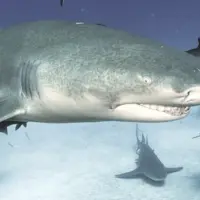
The Western Pacific Regional Fishery Management Council, in partnership with the Pacific Islands Fisheries Group, hosted the region’s first shark depredation workshop Feb. 10–11, 2026, to address the issue and develop mitigation strategies for U.S. Pacific Island fisheries.
Fifty-two participants from four countries and all three U.S. Pacific Island territories attended.
Shark depredation was repeatedly raised during the Council’s community consultation meetings held region-wide in 2025. Fishers described lost catch, damaged gear and safety concerns during bottomfishing and trolling—what many called a growing “tax” on their livelihoods. The issue was highlighted in Moloka‘i, Kaua‘i, Wai‘anae, Kona, Guam, the Northern Mariana Islands and the Manu‘a Islands, where fishers reported more frequent interactions both nearshore and offshore. Fishermen from American Samoa, Guam, the Northern Mariana Islands and Hawai‘i shared firsthand accounts and the need for practical solutions.
Plenary presentations reviewed trends in shark interactions across the Pacific Islands, the effectiveness and limitations of commercially available deterrent technologies, and the complex regulatory landscape governing shark interactions.
Breakout sessions and an evening forum brought fishermen, scientists, managers and technology developers together to identify cost-effective fishing adaptations, priority research gaps and governance challenges linked to environmental change.
Participants described depredation as an increasingly significant economic and operational burden, including longer trips to replace fish. In some fisheries, fishers reported losing up to 50% of their catch in certain instances, along with growing “operational fatigue” from repeated shark encounters.
American Samoa participant Vincent Tofilau said the workshop “provided a ground-breaking platform for scientists and fishermen” and laid the foundation for future regional collaboration.


