The American Samoa Government acknowledges the U.S. Bureau of Ocean Energy Management (BOEM)’s recent press release regarding the completion of the Area Identification step of the lease sale process, which determines the specific area of the Outer Continental Shelf (OCS) that will undergo an environmental review for proposed leases for critical minerals.
KHJ News asked Governor Pulaalii Nikolao Pula last week if he was concerned that the wishes of local leaders are being ignored with BOEM going ahead with the area identification for the deep sea mining proposal. And if he planned to write to BOEM to reiterate the position of local leaders.
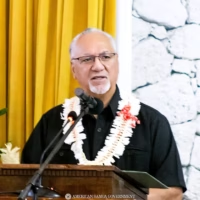
The Governor said in a press release issued Wednesday, “American Samoa has been clear, we oppose any lease sale that risks irreversible harm to our ocean ecosystems.
“Our people depend on healthy fisheries and a pristine marine environment. Any activity in the adjacent OCS must prioritize rigorous environmental safeguards and respect the cultural and economic interests of American Samoa.”
While maintaining this position of caution and opposition to premature leasing, the Pula Administration recognizes that federal processes will proceed.
Accordingly, American Samoa insists on full inclusion in all stages of BOEM’s planning, environmental review, and decision-making process.
The Governor added, “We are prepared to engage constructively, provided that American Samoa continues to be kept fully informed, actively consulted, and that our concerns – particularly regarding potential impacts to our fisheries – are given priority in BOEM’s analysis.
“Transparency and meaningful government-to-government consultation are essential.”
The press release stated that the American Samoa Government will continue to monitor developments closely and urges BOEM to incorporate the territory’s input into the draft programmatic environmental impact statement.
“American Samoa remains committed to protecting its marine resources for current and future generations.”


