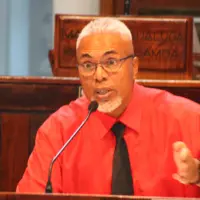
Last Friday, the Senate Select Investigative Committee (SSIC) held its first hearing on excise taxes, with Chief of Customs Iuliano Falaniko as its first witness.
Committee Chairman Senator Togiola Tulafono explained that this initial hearing was intended to gather information on the excise tax process—specifically, the Customs Office process used to clear vessels, containers, goods, mail, and or containers arriving in the territory.
The committee is looking into the reduction in revenues from excise taxes, as well as the increase in drugs coming into the territory.
Togiola explained that they will not ask about specific cases at this stage, The purpose for questioning of the Chief of Customs was to understand the process used in clearing shipments and in the assessment and collection of excise taxes.
Falaniko brought to the hearing several documents that the committee had asked from the Acting Treasurer. These include forms and documents that consignees and importers must complete, deadlines for issuing and submitting the required customs forms, charges and fees for filing, waivers and exceptions for payment of customs fee, a list of companies that import into American Samoa, the process for collection of excise taxes, and customs’ published rules and regulations listing banned goods and merchandise that cannot be imported into the territory.
Senate President Tuaolo Manaia Fruean asked how customs deals with a situation where a company check used to pay for excise taxes on a cigarette shipment bounces after the cigarettes have already been released. “Does customs remove the cigarettes from the business until they have paid up?” he asked. Falaniko said that they would consult with the Attorney General’s Office on what to do.
Tuaolo disagreed, saying customs should simply confiscate the cigarettes until the business pays what it owes for the bounced check. He said that customs does not have the authority to approve partial payments for excise taxes. “Just go and take back the cigarettes. It’s as simple as that!” he declared.
Falaniko thanked him for the advice and said they would consider it.
The Senate President also asked about the number of vans being brought in as private vehicles but are being used for commercial purposes. He said many of the Asian-owned businesses are using these vans to transport store goods. The excise tax on private vehicles is 10%, while commercial vehicles are subject to a 15% excise tax. The Customs Chief said the Office of Motor Vehicles should inform customs when an importer changes a vehicle registration from private to commercial use.


